On this page
Enterprise transformation works when every initiative is tied to the value it has to deliver, and someone stays accountable for that value long after go-live.
Most leadership teams know where they want the business to go. The harder part is turning those priorities into change that shows up in the numbers. Enterprise transformation programs often start with a strong strategy and a well-funded roadmap, then lose momentum somewhere between the plan and the operating reality. Systems go live, but processes stay the same. Benefits are forecast, but nobody tracks them.
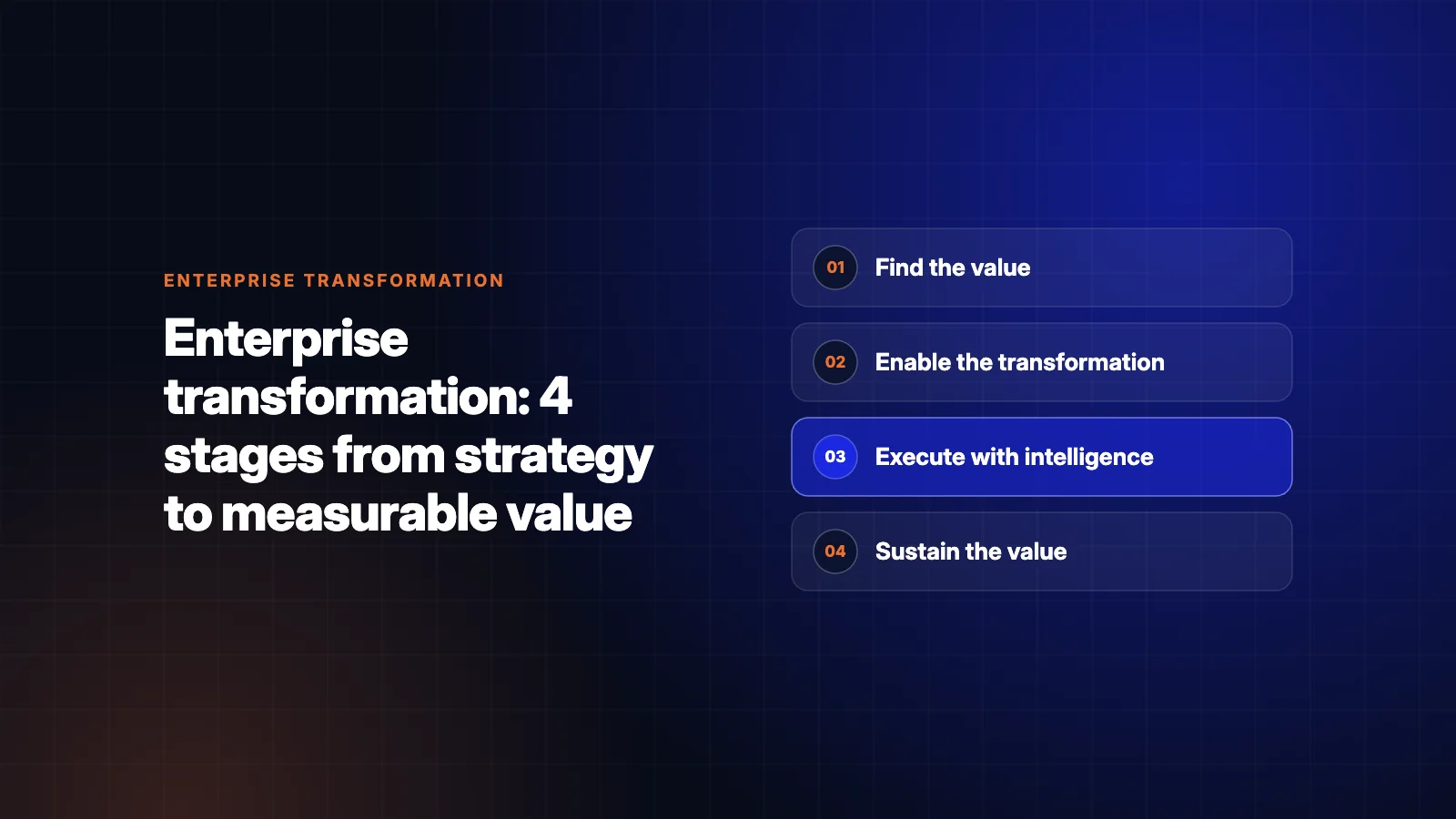
At StrategyStack, we approach enterprise transformation as one connected path: find the value, enable the change, execute with intelligence and sustain the results. This article explains each of the four stages, where programs usually stall and what leaders can do to keep transformation on course.
Why enterprise transformation programs stall
Transformation rarely fails because the strategy was wrong. It usually stalls for practical reasons that compound over time:
- Value is defined too loosely. “Modernize finance” or “become data-driven” are directions, not outcomes. Without a baseline and a target, progress cannot be measured.
- Too many initiatives run at once. When everything is a priority, scarce leaders and specialists are spread thin and nothing finishes well.
- Technology is treated as the transformation. A new ERP or platform enables change, but processes, roles and decisions also have to change for the business to benefit.
- Benefits are not owned. Once the program team moves on, no one is responsible for making sure the promised savings or improvements actually land.
- Support ends at go-live. Systems drift, workarounds creep back and the gains fade within a year.
Each of these problems is avoidable if the program is designed around value from the start.
Stage 1: Find the value
Every enterprise transformation should begin with a clear view of where value sits and how much of it is realistic to capture. That means:
- Confirming the three to five priorities that matter most to the business over the next 12 to 24 months.
- Establishing a baseline for each one: cost, cycle time, working capital, error rates, customer experience or revenue.
- Sizing the opportunity and agreeing which initiatives move the needle, and which can wait.
- Naming an executive owner for each outcome, not just for each project.
The output is a short, prioritized roadmap that leadership can defend, with value targets attached. This is the core of our Strategy & Advisory work.
Stage 2: Enable the transformation
With priorities agreed, the next step is to build the structure that makes change possible. This is where operating model, process and platform decisions come together:
- Operating model: who does what, where decisions are made and how teams are organized, including shared services and global capability centers where they make sense.
- Process design: simplifying and standardizing the end-to-end processes the business runs on, before automating them.
- Platforms: selecting and implementing the ERP, finance and commerce systems that support the target model, rather than recreating old workarounds in new software.
- Governance: a lean program office focused on decisions, dependencies and benefits, not just status reports.
Our Business & ERP Transformation and Finance Transformation teams lead this stage, so the roadmap turns into an executable plan.
Stage 3: Execute with intelligence
Enterprise transformation today is not only about new systems. It is about bringing intelligence and automation into everyday workflows so teams spend less time on manual work and more time on decisions.
This is where enterprise AI earns its place. Applied well, AI helps organizations:
- Spot exceptions, bottlenecks and risks earlier, instead of discovering them at month-end.
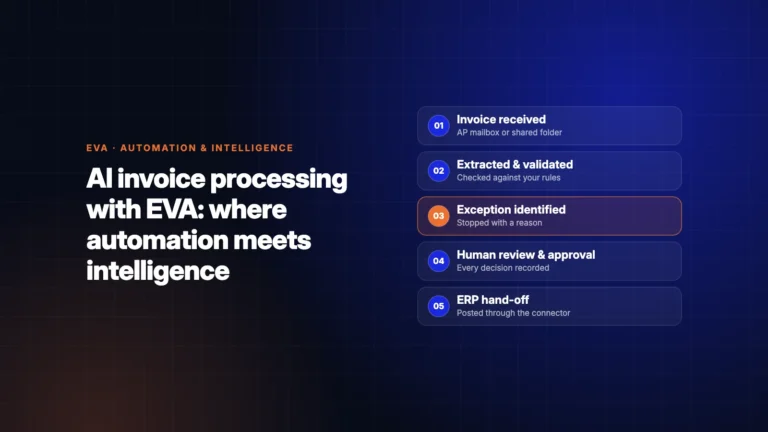
- Automate routine, rules-based work such as invoice processing and reconciliation.
- Keep people in control of approvals, with a clear record of every decision.
EVA, StrategyStack’s flagship enterprise AI platform, was built for exactly this stage. It starts with finance, automating invoice processing and exception management within the ERP environment a business already runs. You can explore EVA here.
The key principle is sequencing: automate a process only after it has been simplified, and measure the result against the baseline set in Stage 1.
Stage 4: Sustain the value
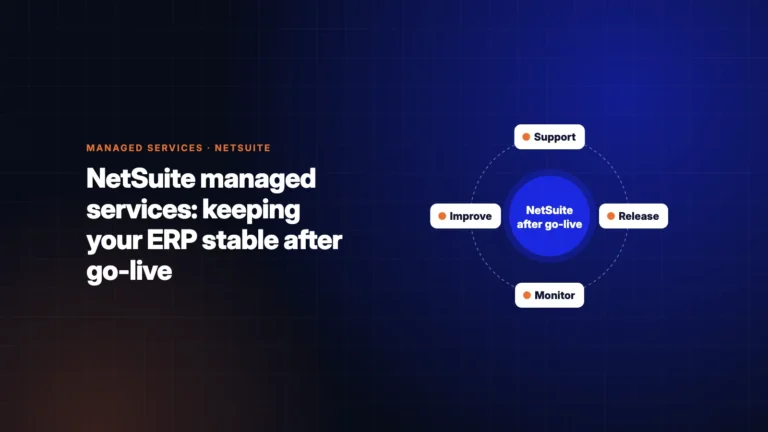
The final stage is where many programs fall short. Once the transformation team moves on, someone still has to operate, monitor and improve the platforms and processes that deliver value.
- Run and support: stable day-to-day operation of ERP and business applications, with clear service levels.
- Continuous improvement: a backlog of enhancements prioritized by business value, not by who asks loudest.
- Benefits tracking: regular reviews of the outcomes agreed at the start, so leadership can see what has been realized.
This is the role of Application Managed Services and Business Operations: making sure the value a transformation promises is the value the business keeps.
Five questions leaders should ask before the next enterprise transformation
- Can we state, in numbers, what this transformation will change and by when?
- Who owns each outcome after the program team has moved on?
- Are we fixing processes before we automate them?
- Where could enterprise AI remove manual work while keeping people in control?
- How will we support, measure and improve the solution in year two and beyond?
If any of these questions is hard to answer, the roadmap needs work before the budget is committed.
How StrategyStack helps
StrategyStack brings strategy, enterprise AI and managed operations together in one delivery model. Senior-led consultants define the roadmap, transformation teams lead the change, EVA brings intelligence and automation into workflows, and our managed services teams sustain the results.
If you are planning your next enterprise transformation, talk to our team about turning your priorities into an executable roadmap.